Partners
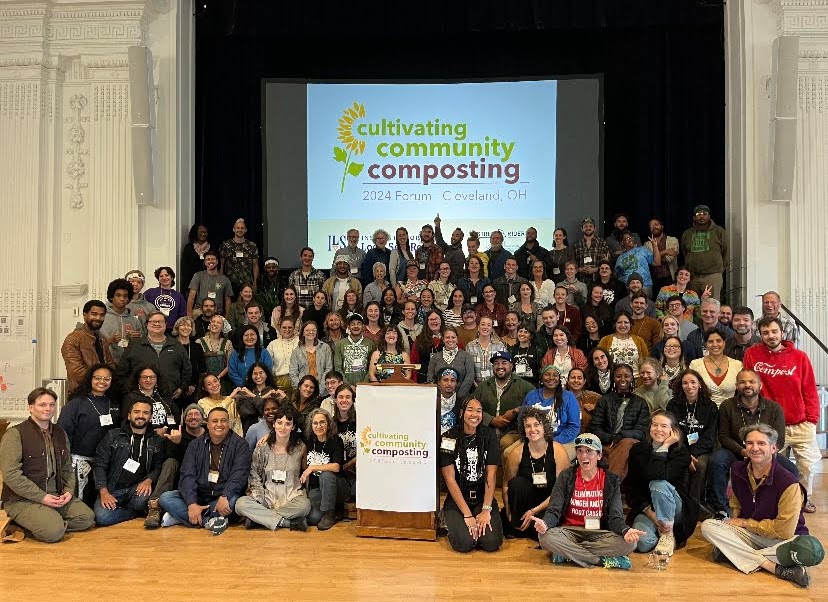
Outside of Cincinnati, we are part of the Community Composters Coalition, a network of community composting organizations sharing knowledge and resources across the country.
Building composting infrastructure
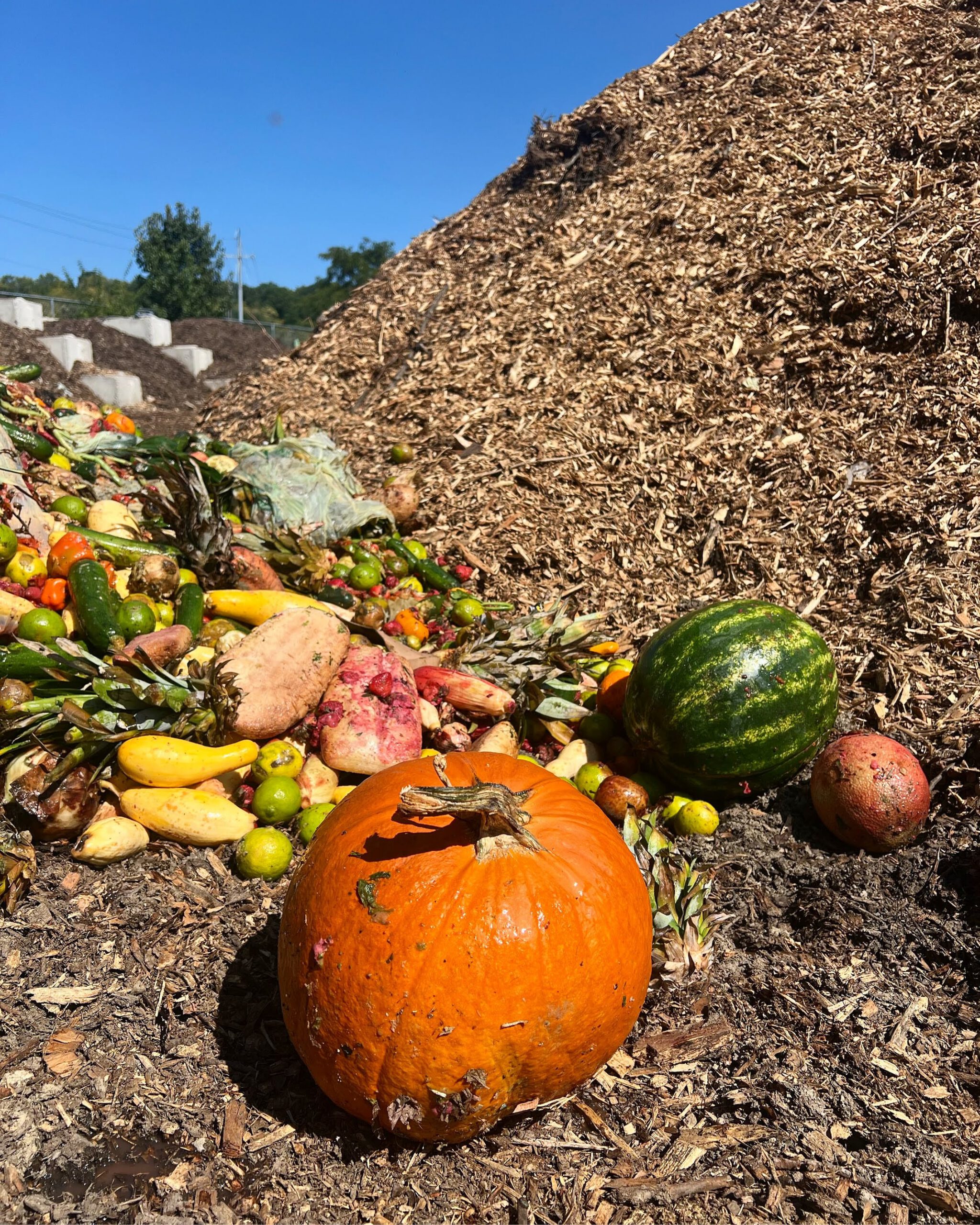
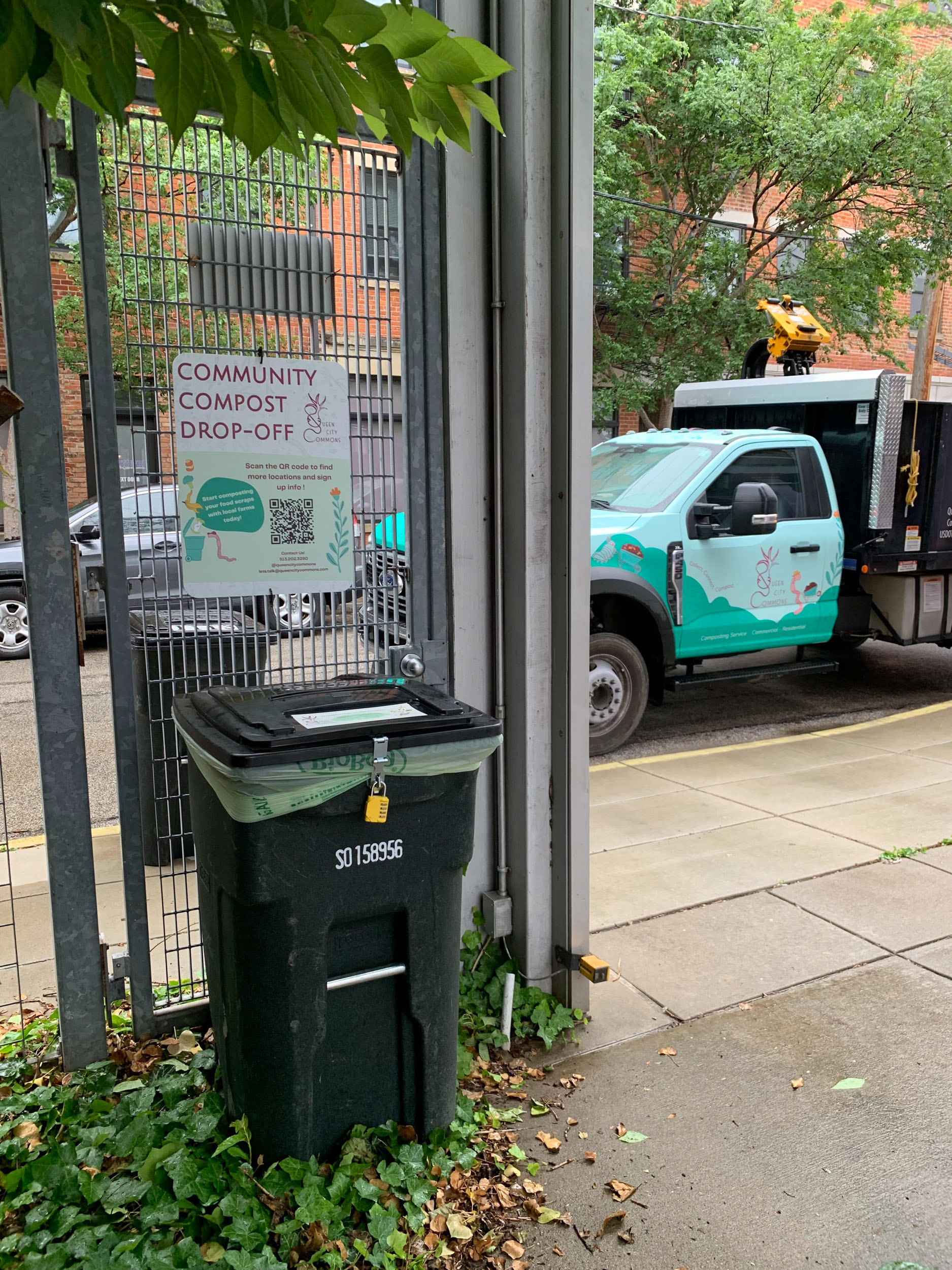
Queen City Commons is a part of a collaborative group of individuals and organizations working to build composting infrastructure and participation in the Cincinnati region. This starts with our composting site partners (described below): farms and gardens that transform the food scraps we collect into quality, local compost.
We also work alongside regional and governmental organizations in co-creating a network of composting infrastructure, including the City of Cincinnati, Hamilton County ReSource, Green Umbrella, and Co-op Cincy.
Composting Site Partners
The soil consists of a whole community that retains and shares nutrients – from bacteria and fungi to nematodes and protozoa, to roots and worms and springtails (and could we go on!). Our composting partners also consist of a network of people and organizations that make this effort sustainable.
Keeping the composting process as local as possible ensures that the nutrients from our food scraps return to soils right here in the Cincinnati region. Queen City Commons’ composting site partners consist of the following local farms and gardens:

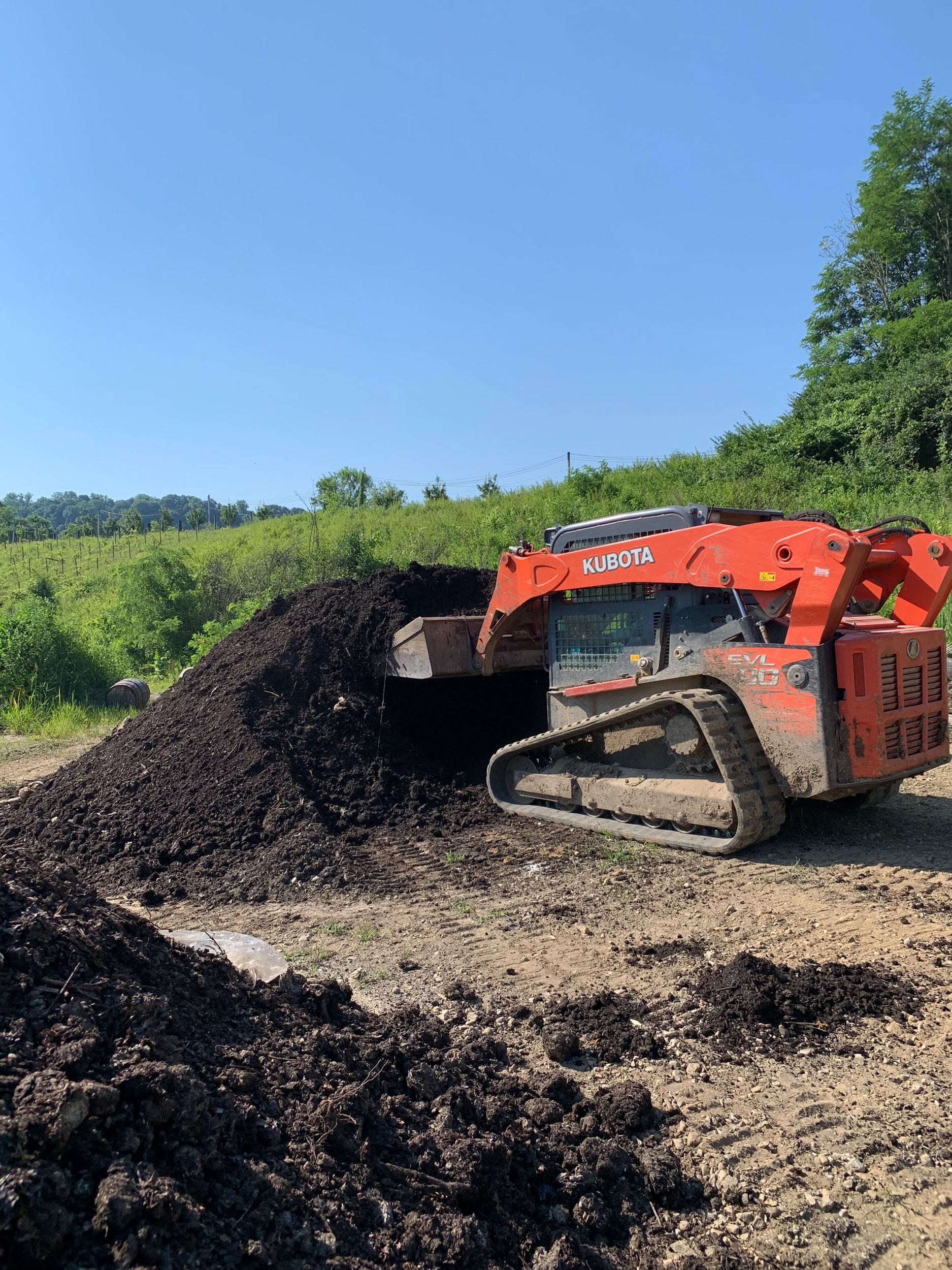
Carriage House Farm
Carriage House Farm is a family-run farm and market located in North Bend, Ohio that puts into practice the spirit of community. They offer fresh produce, locally-crafted and artisanal foods, and on-farm classes and events.
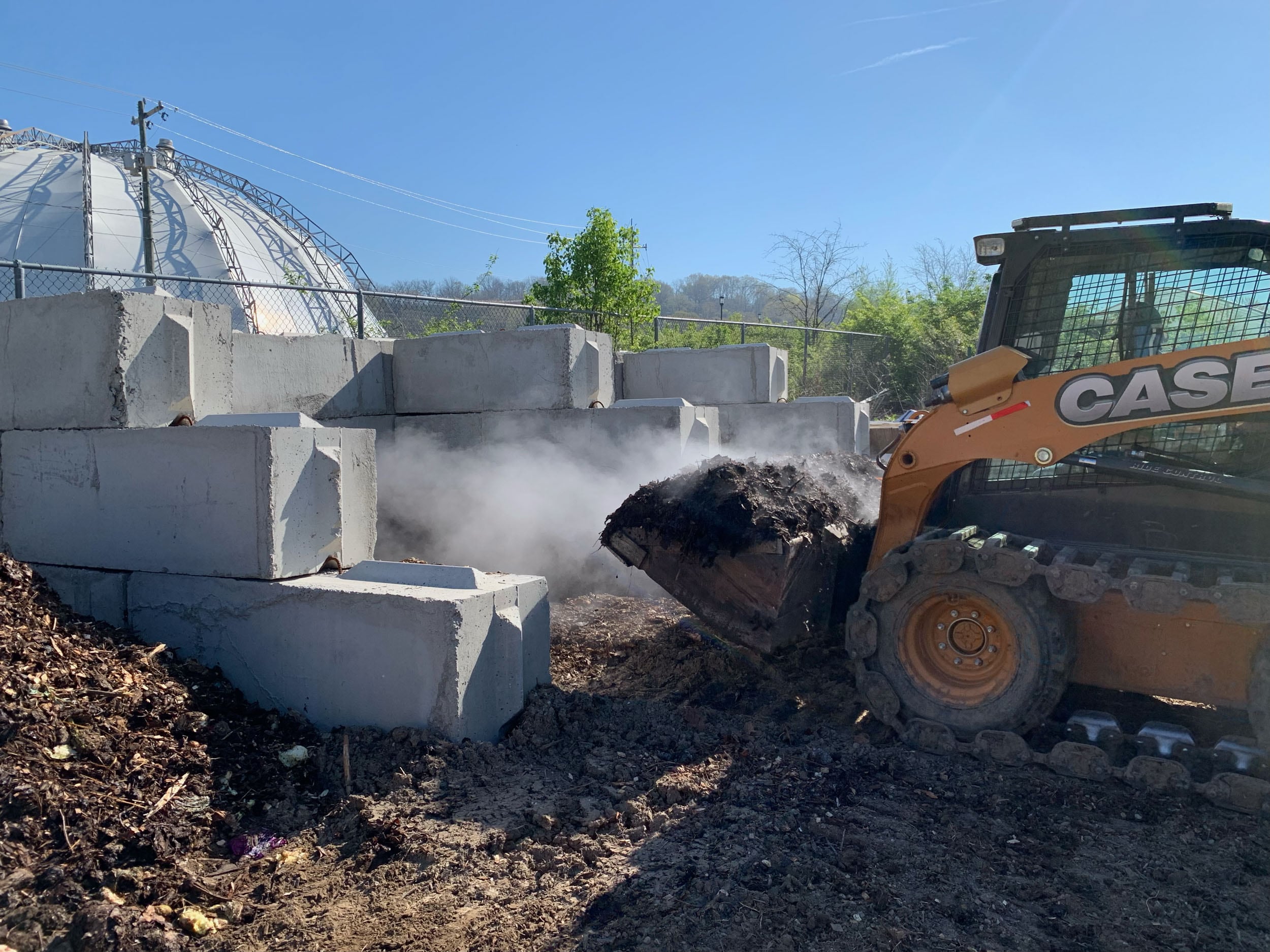
The Common Orchard Project
The Common Orchard Project located at Camp Washington Perennial Farm aims to bring people and food together by building orchards on vacant and community-owned land. Thanks to a USDA grant through the City of Cincinnati and Green Umbrella, this composting site is on track to process 30,000 pounds of food scraps a month at full capacity. Since 2024, the Common Orchard Project has been selling bagged and bulk finished compost to the public. Check out their website to order your own!
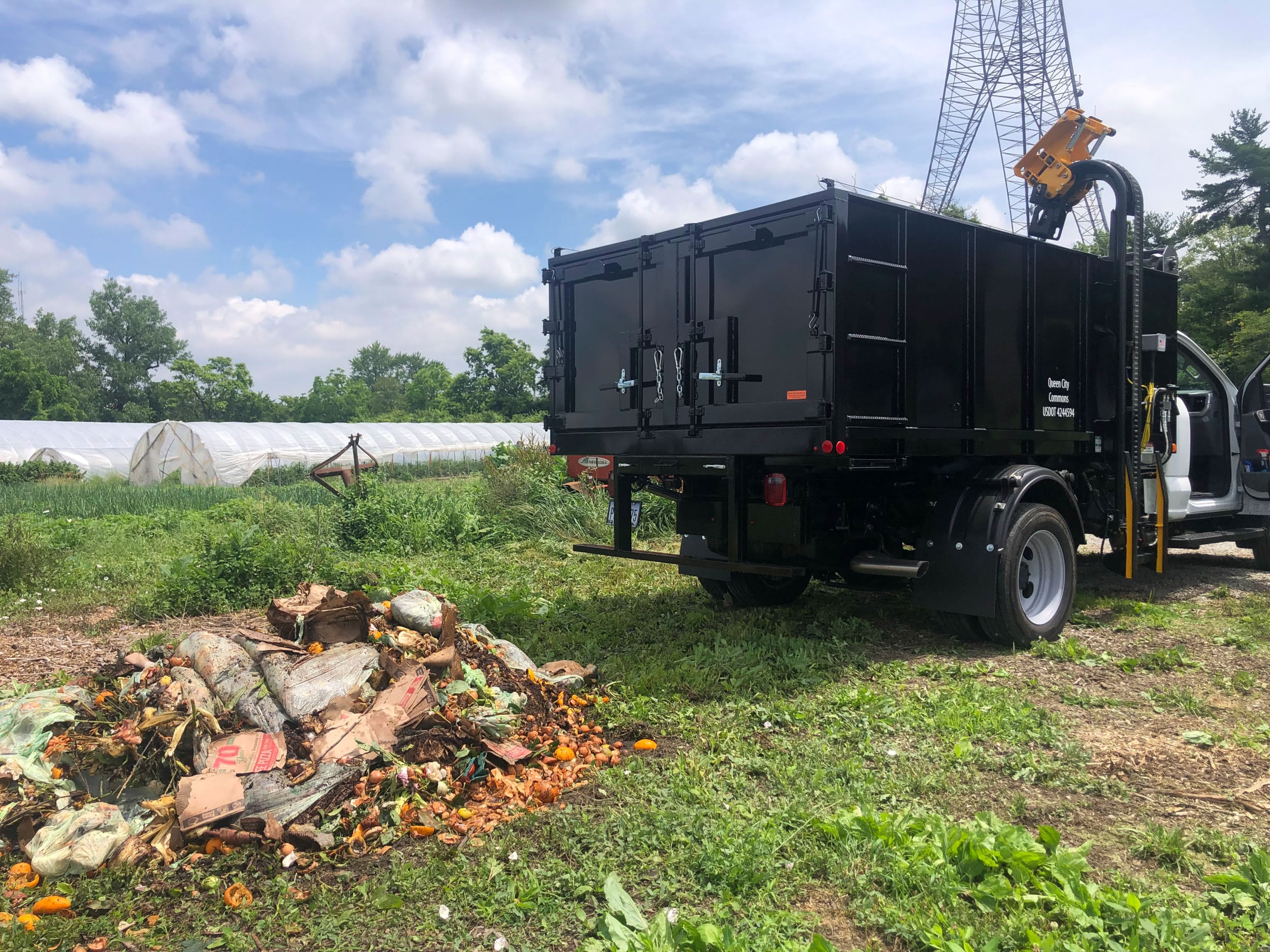
Our Harvest Farm
Our Harvest Farm is a worker-owned farming cooperative that creates farm jobs that pay family-sustaining wages, and employs responsible growing practices to strengthen Cincinnati’s urban food system. Our Harvest partners with Cardinal Land Conservancy‘s Bahr Farm in College Hill, which has been protected as farmland in perpetuity.
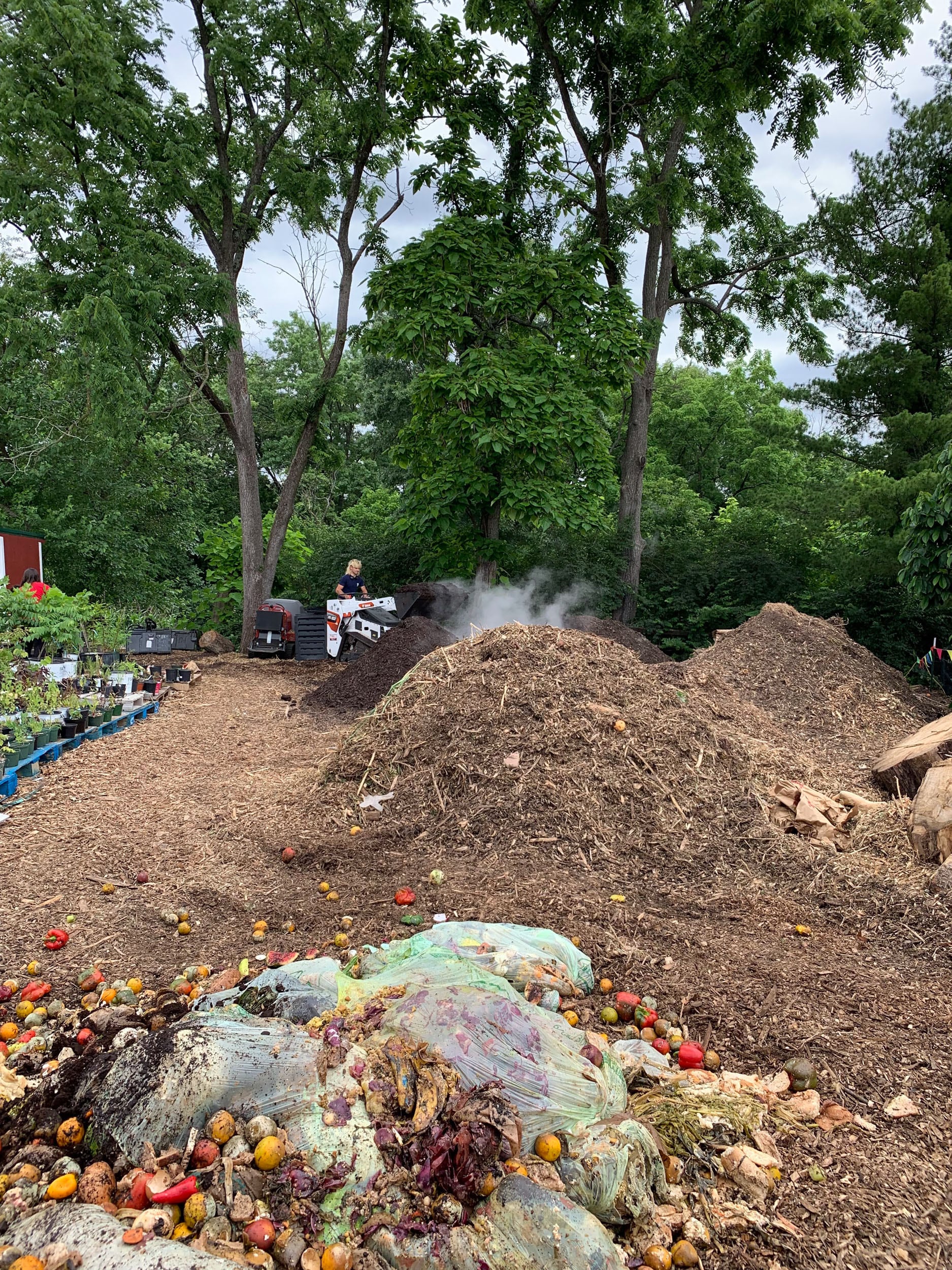
Tikkun Farm
Tikkun Farm is a 3.5-acre nonprofit farm located in the Mt. Healthy neighborhood. Tikkun Farm focuses on restoration in their community by growing abundant food, hosting a food pantry, operating a compost program, hosting community events, and running a job training program, among many other ventures.
Animal Feed Partners
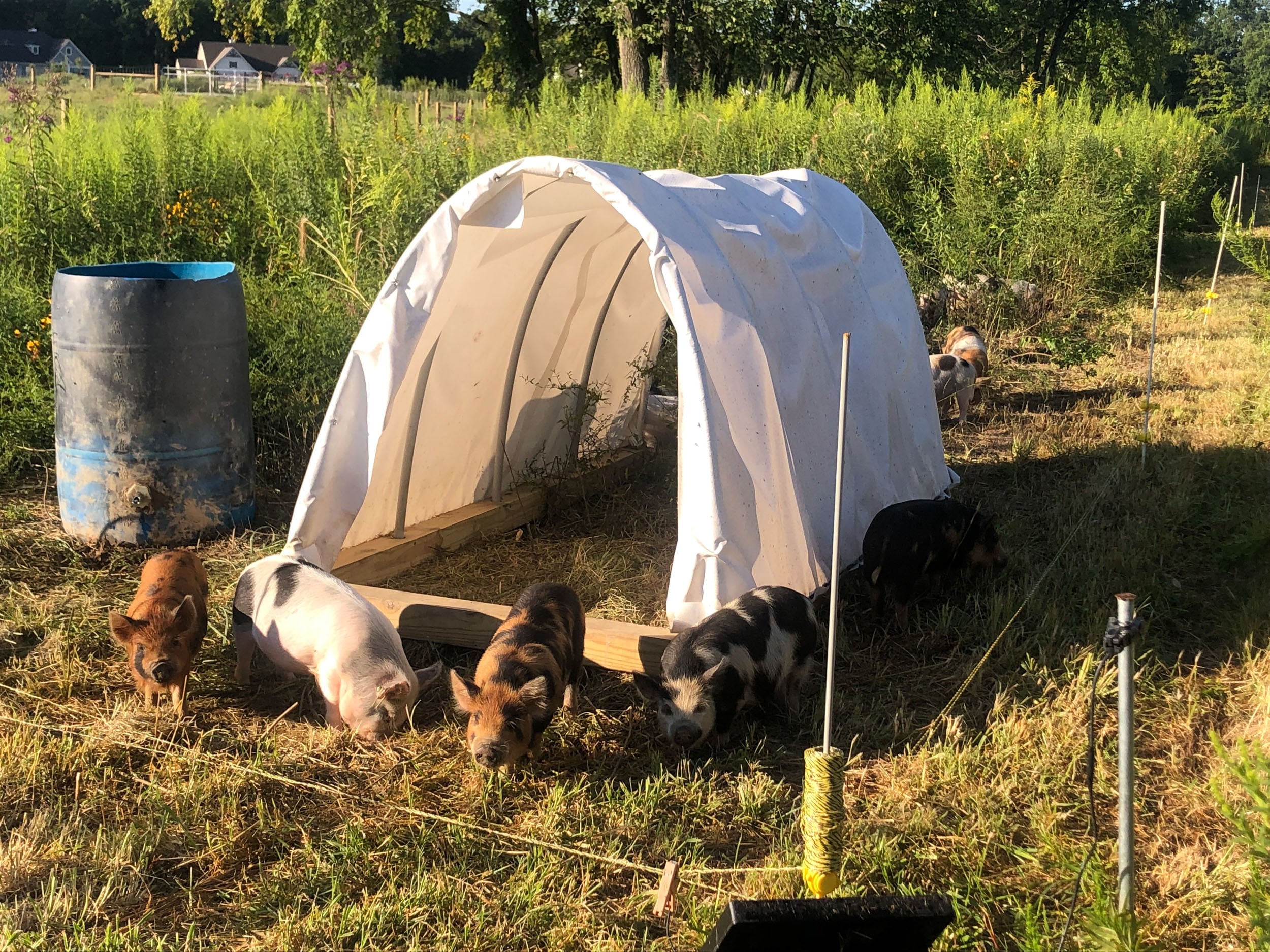
A portion of the food scraps we collect are fresh enough to be used by farms for animal feed. We work with two farms that use these scraps to feed their cows, sheep, pigs, and chickens. Flourish & Roam is a regenerative farm east of Cincinnati, with a commitment to honoring the land, animals, and our shared future through their farming practices. Our second partner farm is located in California, KY and raises beef cattle on their family farm.

Garden Partners
The Walnut Hills Redevelopment Foundation (WHRF) gardens are a group of gardens that provide free produce to Walnut Hills area residents. In partnership with the WHRF gardens and Gary Dangel, we processed and tested small-scale composting methods between 2020 and 2022.


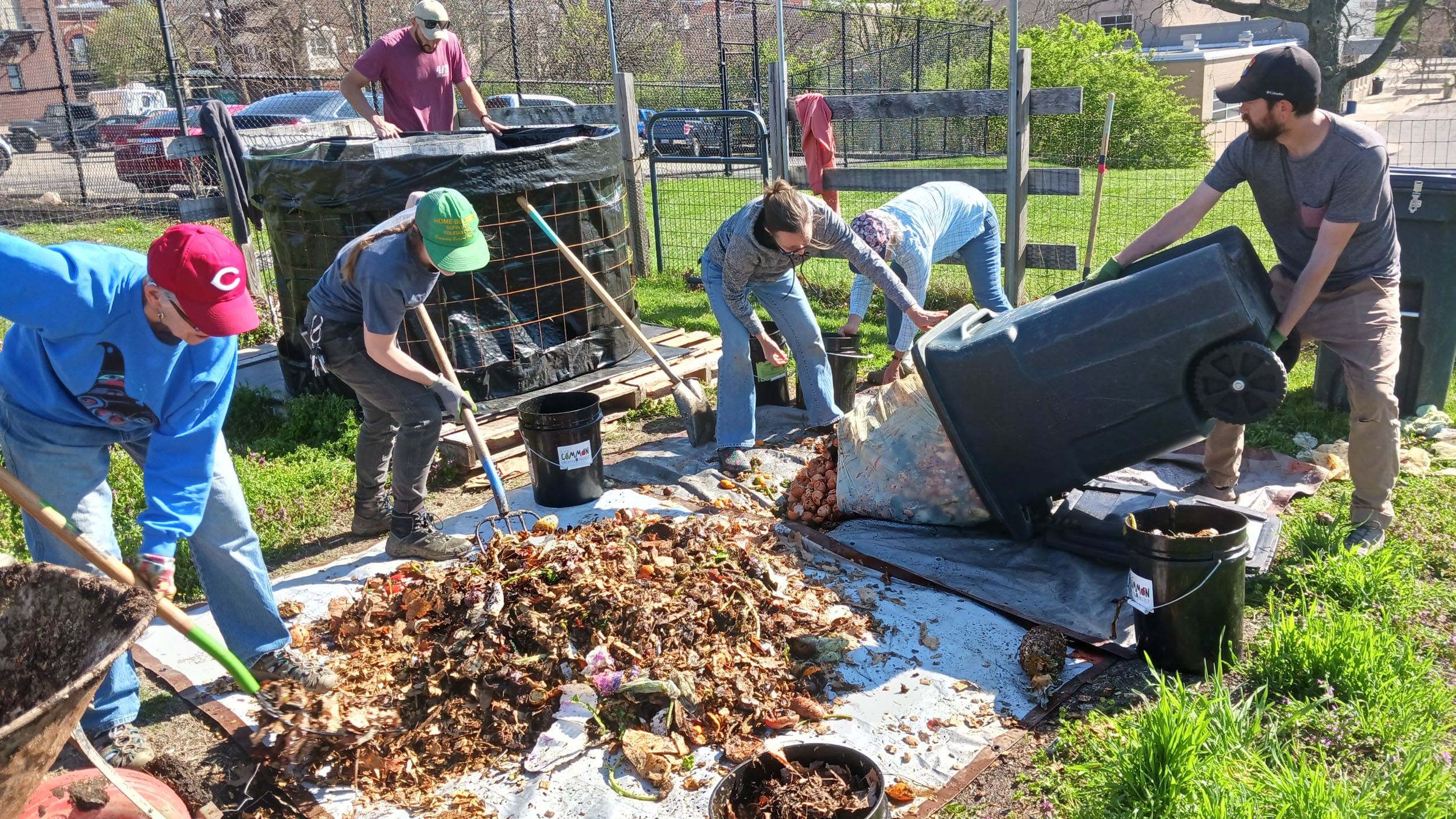
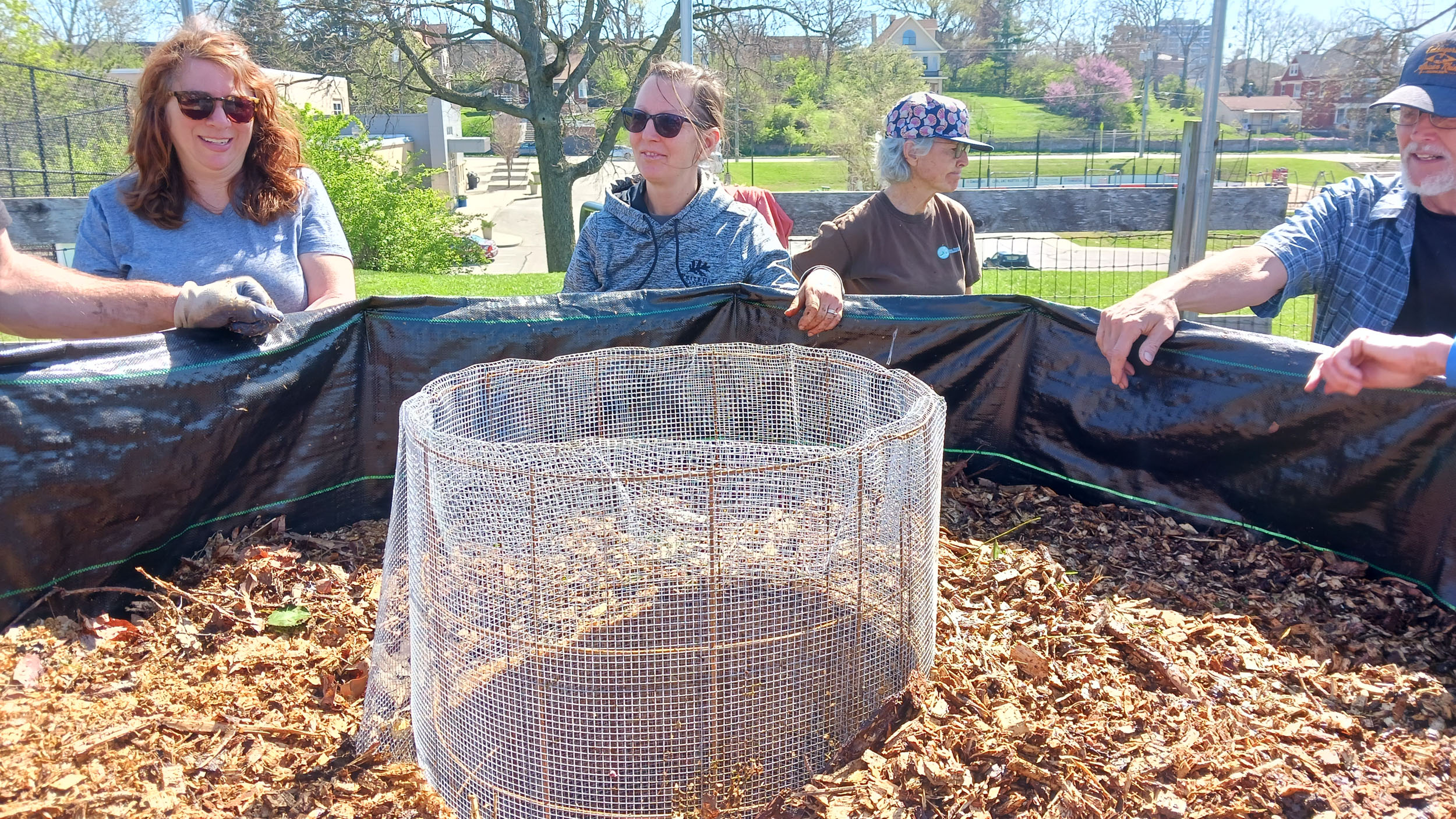
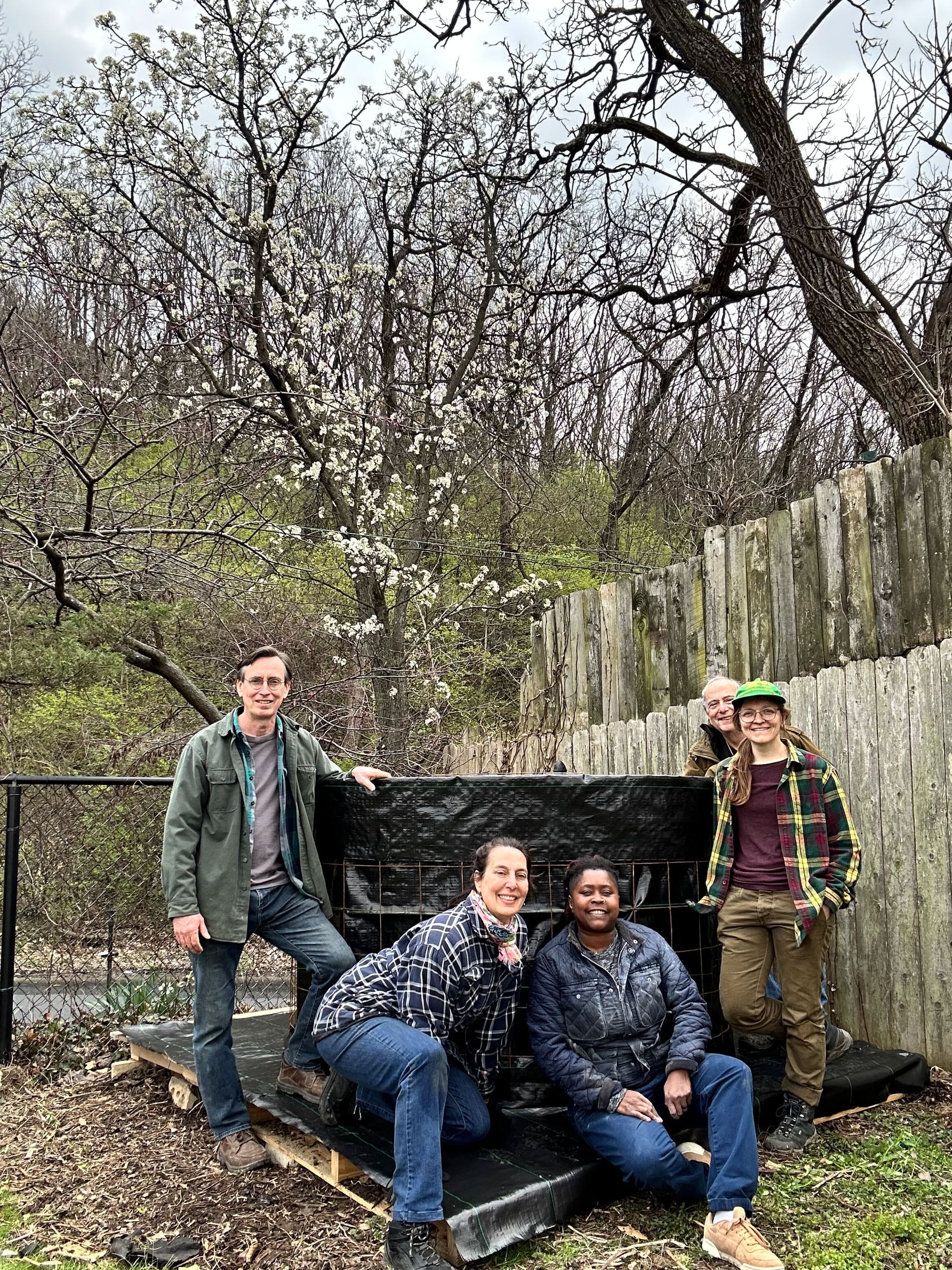
Since 2022, the City of Cincinnati has been working through a USDA grant to build composting systems with community gardens across the City. This composting work has been inspired by the Johnson-Su bioreactors built at the WHRF community gardens. These bioreactors use a no-turn, aerated composting system that meets the needs and limitations of gardens. This system allows gardens to compost up to a ton of material all at once, requires minimal-to-no ongoing maintenance, and yields up to a cubic yard of quality compost in a year's time—all for the garden to use.
We have been proud to provide a significant amount of the food scraps used to fill these bioreactors. To learn more about these bioreactors and receive support from the City to build one at your community garden or school, check out the City’s program page.