Commercial Compost Collection Service
Don't let your food scraps waste away in the landfill.

Partner with Queen City Commons to ensure that your organization's food scraps are turned into compost with local farms and gardens. Collection service is easy, and we’re here to help guide you every step of the way.
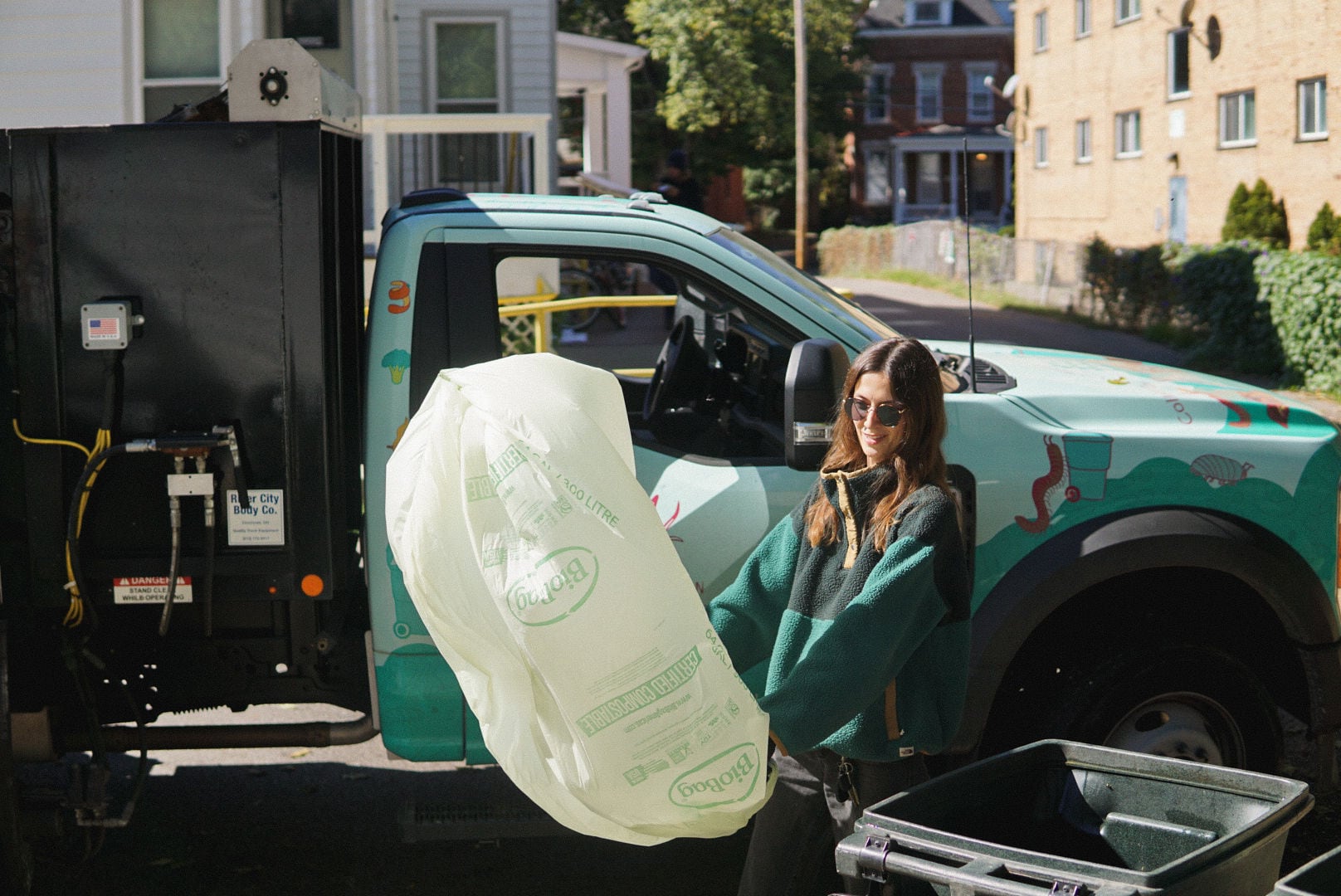
Clients We Serve
We service clients big and small, from small coffee shops to larger manufacturers generating thousands of pounds of scraps every week. Our clients include:
- Restaurants
- Coffee shops and cafes
- Food pantries
- Breweries
- Grocery stores
- Food manufacturers
- Apartment complexes
- Schools
- Offices
- Religious organizations
- Hospitals
- Municipalities
Current Customers
turning their food scraps into soil include







Hear what our current customers have to say:
Initial Setup
Setting up compost service with Queen City Commons is easy. An initial review with your team helps determine the appropriate service for your needs.
This can include:
- A one-week waste audit to help determine your service volume and frequency.
- A site visit to determine location and coordination of carts.
- Employee training to get your team on board.
- At the end of setup, we’ll bring out the appropriate number of carts and you’re ready to get started!
Service Includes
Weekly or every-other-week collection
depending on need
64-gallon collection cart(s)
to collect scraps
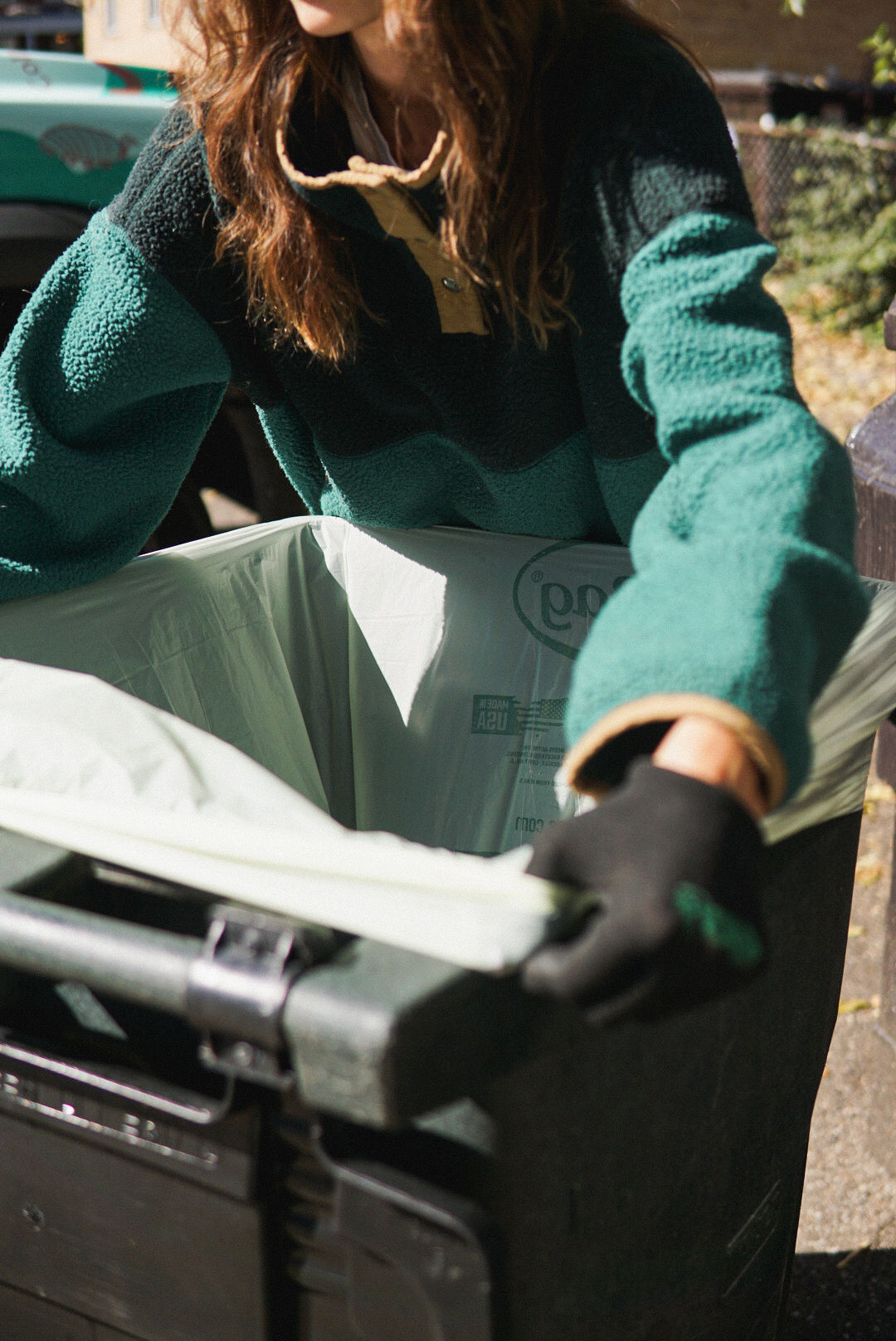
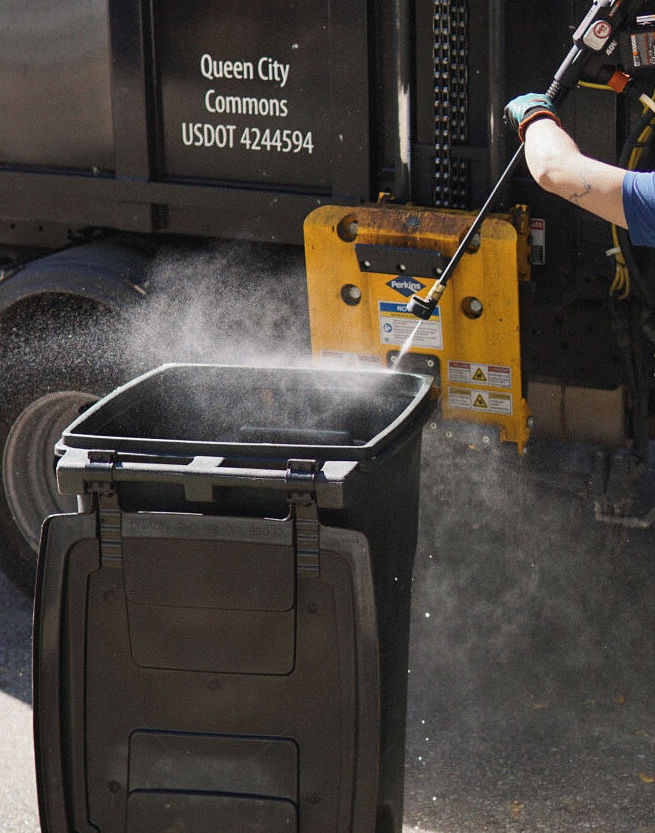
Rinsed and lined carts at every collection
to ensure all stays tidy (lined with BPI-certified compostable liners).
Staff trainings as needed
to help orient everyone to what can be composted and why it all matters.
Impact and diversion reports
monthly or annually, as requested.
Responsive and immediate customer service
we’re here to help make this easy and streamlined; let us know how we can help.


Impact and Diversion Reports
Composting your food scraps is a small action with a significant environmental impact. Our monthly impact reports give you precise, actionable data to support your sustainability goals. They can be used to meet the requirements of major certifications focused on reducing greenhouse gas emissions.
Your impact reports include:
- Pounds of food scraps composted
- The farms and gardens receiving your food scraps
- Equivalent carbon emissions diverted
- Equivalent vehicle miles avoided
- Data suitable for certifications like B Corp, LEED, and other greenhouse-gas–reduction programs

Join the Fight Against Food Waste
Fill out the form below to get in touch with our team and learn more about composting at your place of work.
Commercial Form
Send Us A Message

FAQs
Commercial service cost depends on a variety of factors, including weekly poundage, how often we collect, and number of carts collected. Reach out to us for a quote customized to your organization’s needs.
We generally service within the I-275 loop. This is not a hard and fast rule, so reach out to us if you’re on the edge and we’ll let you know if you fall within our service area.
Pickups are scheduled based on your volume and facility needs – ranging from every-other-week collections to multiple pickups a week. Most of our customers receive weekly collections.
We want you and your staff to feel empowered about composting! We’ll walk through what we do and don’t accept, review why composting matters, and answer any questions you and your staff might have.
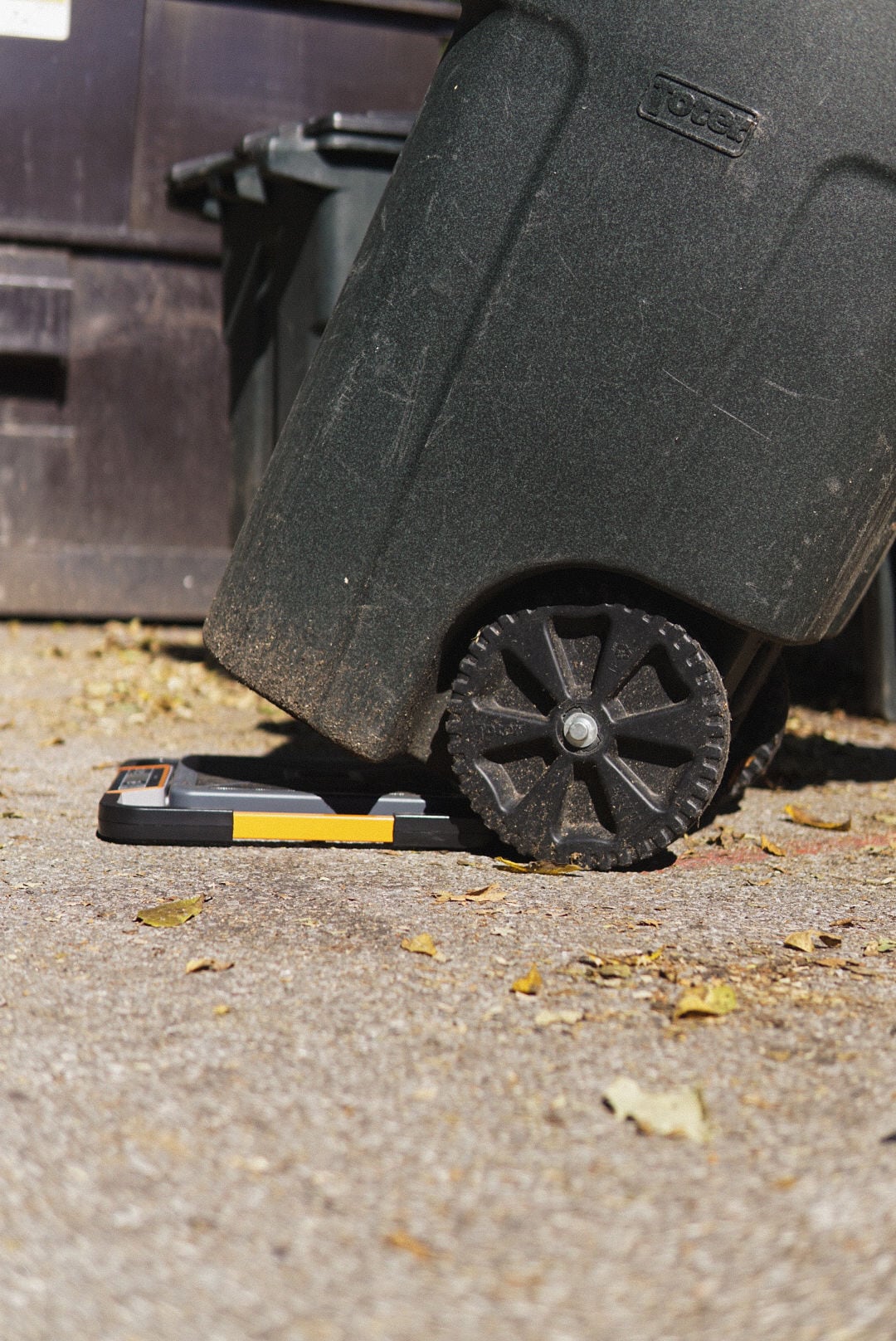
We weigh every cart we collect so we can report to you how many pounds your organization or drop-off location diverted from the landfill. Using the EPA’s Waste Reduction Model, we convert these pounds to carbon emissions saved by composting with Cincinnati-area farms and gardens, instead of being landfilled.
To provide a tangible understanding of what this means, we use the EPA’s Greenhouse Gas Equivalencies Calculator to equate these carbon emissions saved to how many passenger vehicles were taken off the road for one year.
Composting is as much about soil health and local food production as it is about waste reduction. Our environmental impact report also includes data on which farms and gardens composted your food scraps – so you can see where exactly your food scraps are being turned into more food around Cincinnati.
Join our Quarterly Newsetter
Newsletter